Drain Guru answers
Plumbing questions, answered straight.
What to do right now, what it should cost, and when it's a DIY job versus a plumber's. No fluff, no scare tactics.
Clogs & slow drains
How do I unclog a toilet?
First stop more water coming in by closing the valve behind the toilet. Then use a flange plunger: seal it over the drain opening, push down gently, and pump hard 10–15 times. If that doesn't clear it, a toilet auger or an air-pressure drain opener will usually move a paper or waste clog the plunger can't.
Read the full answerHow do I unclog a toilet without a plunger?
Squirt dish soap into the bowl, add a bucket of hot (not boiling) tap water from waist height, and wait 15–20 minutes; that clears many paper and waste clogs. If it doesn't, use a toilet auger or an air-pressure drain opener. Skip chemical drain cleaners: they rarely work on toilets and make the next step dangerous.
Read the full answerHow do I unclog a bathroom sink?
Most bathroom sink clogs are hair and soap caught on the pop-up stopper. Pull the stopper out, clean it, and fish out hair with a plastic drain snake. If it's still slow, cover the overflow hole with a wet rag and plunge, or use an air-pressure opener, so the pressure goes down the drain instead of out the overflow.
Read the full answerHow do I unclog a kitchen sink?
If you have a garbage disposal, first press its red reset button and make sure it isn't jammed. Then seal the second basin (or the dishwasher hose) and plunge or use an air-pressure opener on the clogged side. Grease clogs often clear after a flush of very hot water with dish soap. Never use chemical cleaner with a disposal.
Read the full answerHow do I unclog a shower drain full of hair?
Unscrew or pry off the shower drain cover, pull out visible hair with gloves or a plastic barbed drain snake, then flush with hot water. If it's still slow, the hair mat is further down: plunge with a little water in the pan, or use an air-pressure drain opener with a cone head to push it through.
Read the full answerHow do I unclog a bathtub drain?
Remove and clean the tub stopper, pull out hair, then block the overflow plate (the round cover under the faucet) with a wet rag or tape. With the overflow sealed, a plunger or air-pressure drain opener can build real force on the clog instead of pushing air out through the overflow.
Read the full answerHow do I unclog a floor drain?
Lift the grate, scoop out debris, and flush with a bucket of water. For a local clog, use a drain snake or an air-pressure opener with a wide cone head. If water or sewage comes UP out of a basement floor drain, especially when other fixtures run, that's a main sewer line blockage and needs a plumber.
Read the full answerWhy is my sink draining slowly?
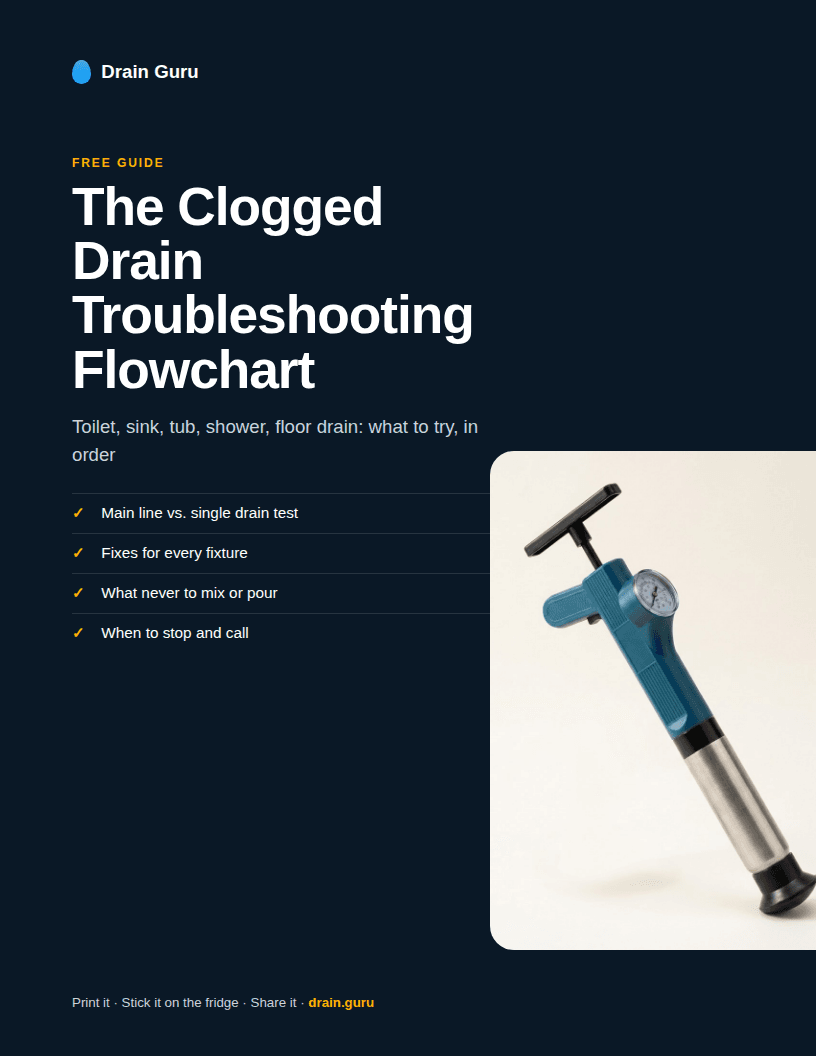
Most slow sinks are a partial clog: hair and soap on the stopper in bathrooms, grease and food in kitchens. Clean the stopper, clear the trap, and plunge or use air pressure with the overflow sealed. If several drains are slow at once, or they gurgle, suspect a blocked vent or main line instead.
Read the full answerDo air-pressure drain openers actually work?
Yes, on the right clogs. An air-pressure opener seals over a drain and releases one burst of compressed air, which pushes soft blockages (paper, waste, hair, grease) through the trap faster than a plunger. It won't fix tree roots, collapsed pipes or main-line clogs, and it shouldn't be used on solid objects or after chemical cleaners.
Read the full answerPlumbing emergencies
My toilet is overflowing. What do I do right now?
Lift the tank lid and push the flapper down to stop water entering the bowl, then turn the supply valve behind the toilet clockwise to close it. Don't flush again. Soak up the water, disinfect the floor, and then clear the clog with a flange plunger, toilet auger or air-pressure opener.
Read the full answerWhat should I do when a pipe bursts?
Shut off the main water valve immediately, then switch off electricity to any area where water is near outlets or appliances. Open the lowest faucets to drain the pipes, move valuables, and photograph the damage for insurance before you clean up. Then call a plumber; a burst pipe needs a proper repair, not a patch.
Read the full answerHow do I shut off the main water supply to my house?
The main shutoff is usually where the water line enters the house: in the basement, crawl space, utility room, garage, or near the water heater. In warm climates it may be outside. Turn a round wheel handle clockwise until it stops; turn a lever handle a quarter turn so it sits across the pipe. Find and test yours now, before you need it.
Read the full answerWhen should I call a plumber for a clogged drain?
Call a plumber when more than one drain is clogged at once, water backs up into the tub or shower when you flush, drains gurgle together, you smell sewage, or a floor drain or cleanout overflows. Those point to a main sewer line blockage (often roots or a collapsed pipe), which household tools can't reach.
Read the full answerWhy are my drains gurgling?
Gurgling means air is being pulled through the water in your drain traps. If one drain gurgles, it's usually a partial clog in that drain. If several gurgle together, or the toilet gurgles when the sink drains, suspect a blocked vent pipe or a partial main line clog; both are worth fixing before they become a backup.
Read the full answerCosts & hiring a plumber
How much does a plumber charge to unclog a drain?
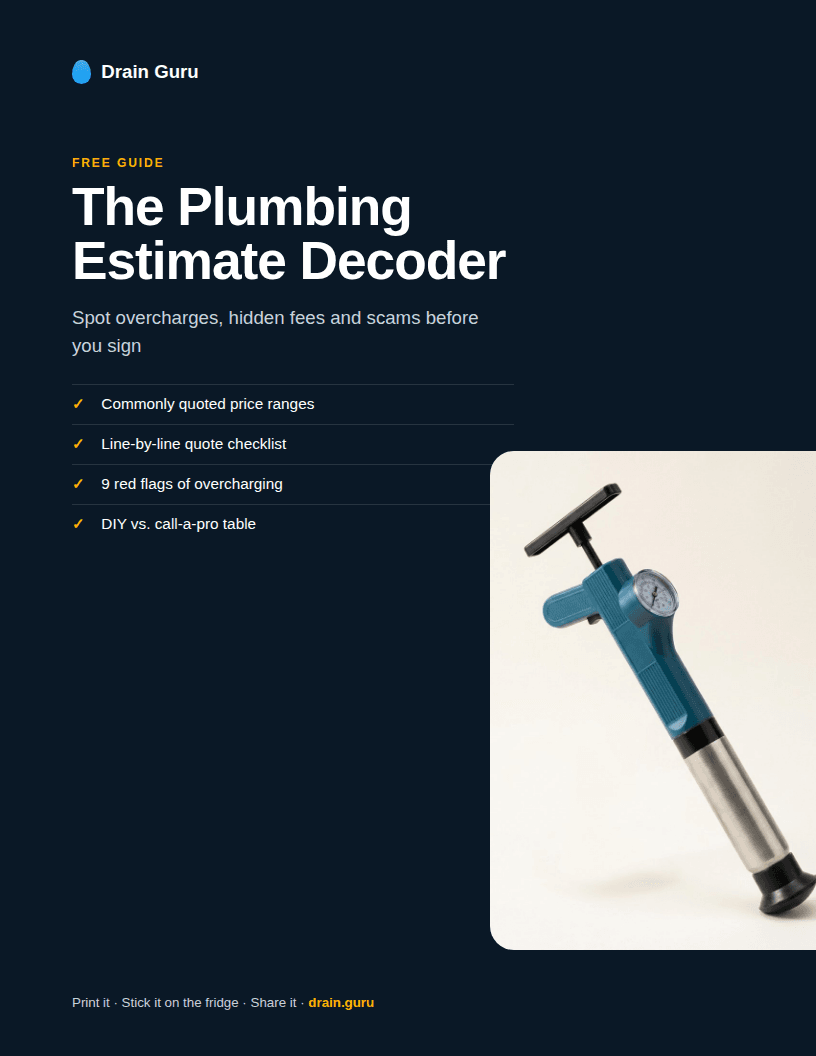
In the US, clearing a single sink, tub or toilet clog is commonly quoted around $100–$300, and a main sewer line $250–$800 or more. Emergency, weekend and after-hours calls often cost 1.5–2× the normal rate. Prices vary a lot by region, so get two quotes for anything beyond a single-fixture clog.
Read the full answerIs this plumbing quote reasonable? How to spot overcharging
A reasonable quote is written, itemized (labor, parts, fees), names the specific problem and fix, and is in line with a second quote. Red flags include pressure to decide on the spot, cash-only demands, vague line items, a big upfront deposit on small jobs, and 'you need a whole new line' without camera footage to show you.
Read the full answerHow do I find a good, trustworthy plumber?
Pick a plumber before an emergency: check their license with your state board, ask for proof of liability insurance, read recent reviews for patterns (not just the star rating), and ask how they price common jobs. A good plumber explains the problem, gives written quotes, and doesn't pressure you.
Read the full answerPrevention & maintenance
Is chemical drain cleaner bad for your pipes?
Chemical drain cleaners are harsh: they rely on caustic or acidic ingredients that generate heat, can damage old metal pipes and weak joints, and are dangerous to skin and eyes. They often don't clear solid clogs and make a plumber's or plunger's job riskier afterward. Mechanical methods (plunger, snake, air pressure) are safer.
Read the full answerDoes baking soda and vinegar unclog drains?
Not really. Baking soda and vinegar react into mostly water, salt (sodium acetate) and carbon dioxide gas. The fizz looks busy but has little force against hair or paper clogs. It can help as light maintenance for odors and minor build-up, followed by hot water, but a real clog needs mechanical removal.
Read the full answerWhy does my drain smell like sewage?
The most common cause is a dry P-trap: the water seal that blocks sewer gas has evaporated, usually in a rarely-used drain. Run water for a minute to refill it. Other causes are gunk in the sink overflow, a partial clog, a blocked vent, or a damaged pipe. If the smell is strong and spreads through the house, call a plumber.
Read the full answerWhat should you never flush down the toilet?
Only flush toilet paper and human waste. Wipes (even ones labeled flushable), paper towels, tissues, cotton swabs, floss, feminine products, diapers, condoms, cat litter, hair, medications and grease all cause clogs or sewer problems. Keep a small lidded trash can in every bathroom.
Read the full answerHow can I prevent clogged drains?
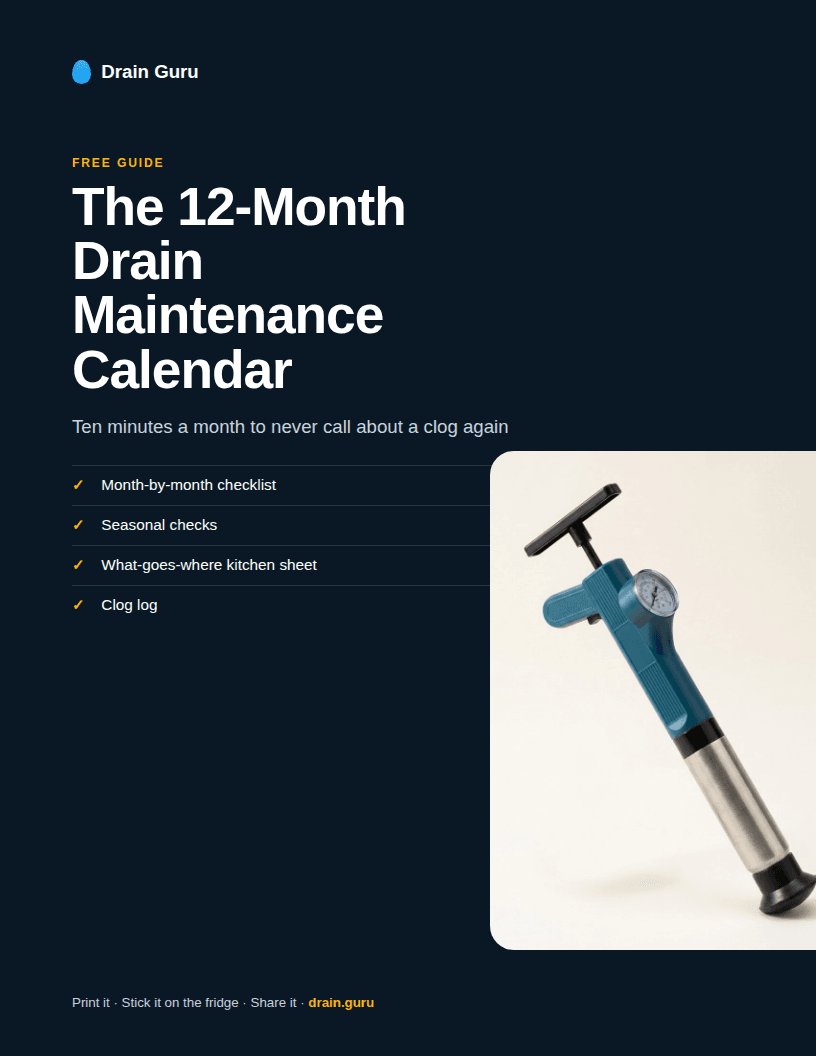
Stop hair and grease at the source: fit hair catchers on showers and tubs, scrape grease into the trash, and keep food scraps out of the sink. Once a week, run hot water through each drain for a minute; once a month, clean stoppers and hair catchers. Clear slow drains early, before they become full clogs.
Read the full answerLandlords & renters
Who pays for a clogged drain: landlord or tenant?
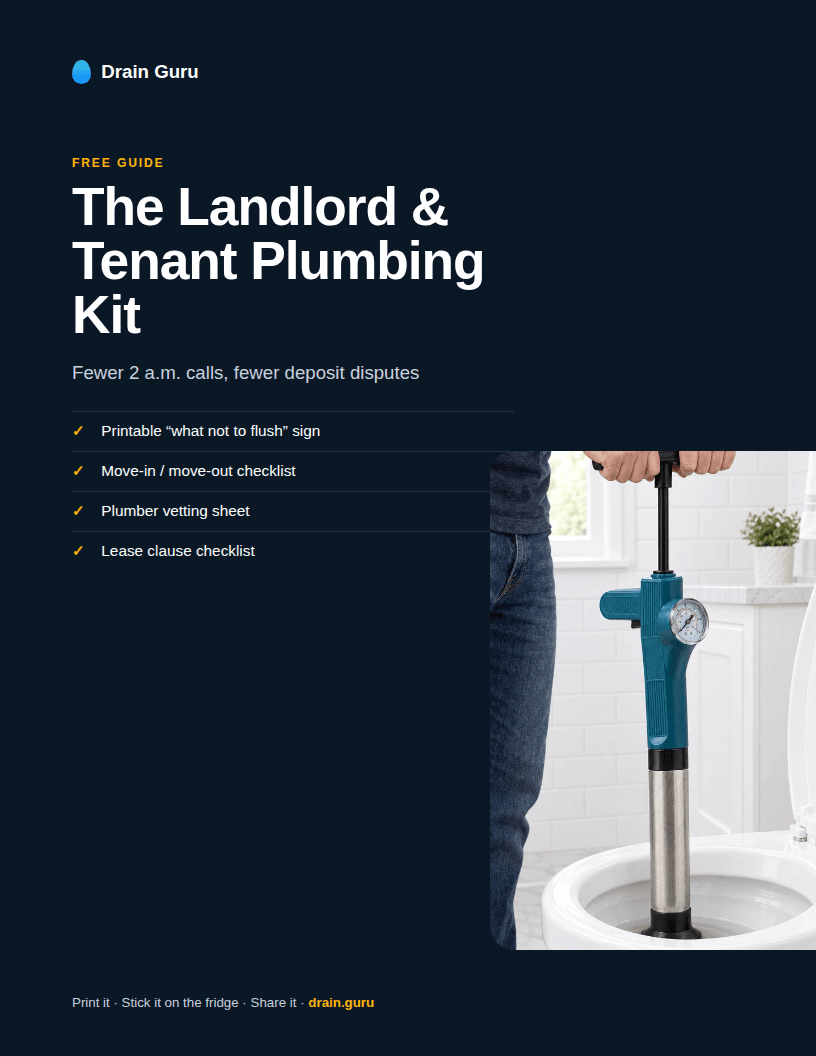
Generally, landlords must keep plumbing in working order, while tenants can be charged for clogs they cause, like wipes, grease or toys. The details depend on your state's laws and the lease, so spell it out in writing. This is general information, not legal advice; check your local landlord-tenant rules.
Read the full answerWhat plumbing maintenance should tenants do?
Renters should keep drains clear of hair, grease and wipes, use hair catchers, clear simple single-fixture clogs early, know where the water shutoffs are, and report leaks, running toilets and slow main drains to the landlord promptly, in writing.
Read the full answerFree printable guides
Keep the answers on paper, too
Checklists, a troubleshooting flowchart and a maintenance calendar. Print them, stick them on the fridge, share them.